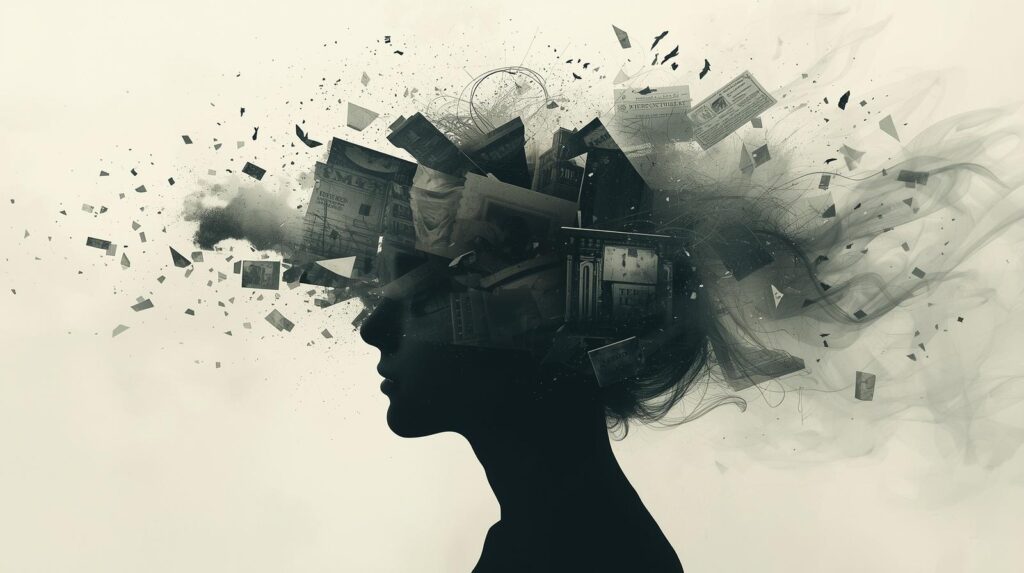
Let’s talk about something a little strange about the human mind.
We like to think our memories work like a video recorder. Something happens, our brain records it, and later we press play. But that’s not really how memory works.
In psychology, a false memory is when a person clearly remembers something that did not actually happen, or remembers it very differently from what really happened.
The person is not lying. They truly believe the memory is real.
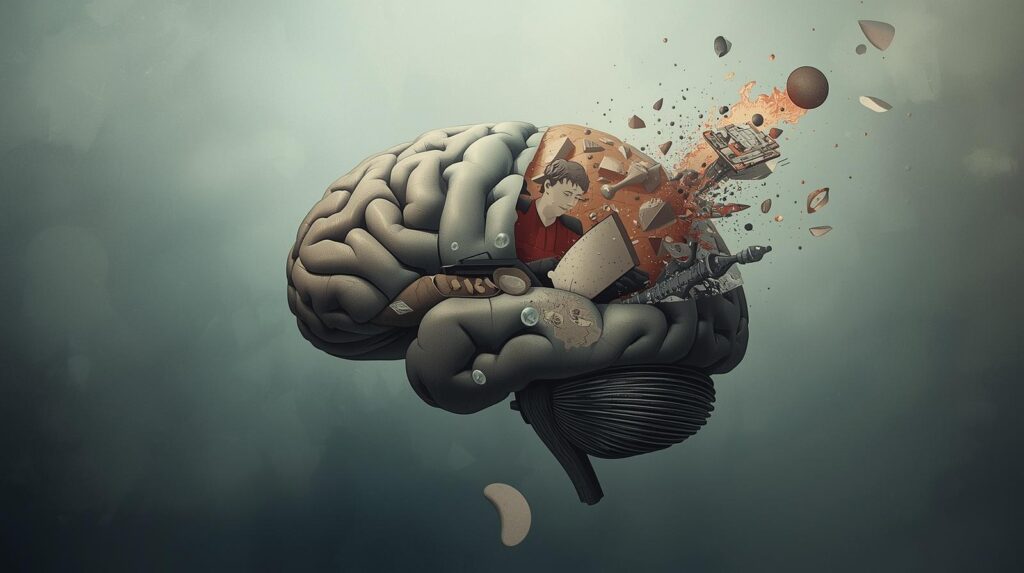
Memory is more like a story your brain rebuilds each time you remember it. And sometimes, during that rebuilding process, small details change… or completely new details appear.
A Real and Disturbing Example
In the book Evil: The Science Behind Humanity’s Dark Side by psychologist Julia Shaw, she talks about a case that really shows how powerful false memories can be.
While she was researching false memories, a prisoner wrote her a letter asking for her book. The man was a former professor who had been convicted of stabbing his father many times. At the time of the crime, he believed something shocking: he believed his father had sexually abused him when he was a child.
That memory filled him with rage. And eventually, it led to violence. But later, through therapy and investigation, something unexpected came out. There was no evidence the abuse ever happened.
It appeared that the memory may have been a false memory that formed over time, possibly influenced by suggestion and emotional stress.
The professor truly believed it was real. His mind had built a story that felt completely true.
This case is unsettling because it shows something important: a memory can feel 100% real even when it isn’t.
Everyday Examples of False Memories
False memories don’t always lead to something dramatic. They happen in small ways all the time.
Here are a few common examples.
1. Remembering a childhood event that never happened
Maybe you “remember” getting lost in a mall as a kid. But later your parents say it never happened. Sometimes family stories or photos can slowly turn into memories.
2. Mixing up details of an event
You remember a friend wearing a red shirt during a party. Later photos show it was blue. Your brain filled in the gap.
3. Witness mistakes
This happens often in court cases. Two people can watch the same event but remember it very differently later.
Memory is not perfect recording. It is reconstruction. That means your brain rebuilds the memory using pieces of information.
Sometimes those pieces are wrong.
Why False Memories Happen
There are a few common reasons.
1. Suggestion
This happens when someone unintentionally plants an idea in your mind.
For example, a question like:
“Did you see the broken headlight on the car?”
Even if there was no broken headlight, your brain may start imagining it.
Over time, imagination can turn into memory.
2. Imagination
The brain struggles to separate imagined events from real experiences, especially if we imagine something many times.
The more you picture it, the more familiar it feels.
And familiarity can trick the brain into thinking,
“Maybe this really happened.”
3. Emotional Stress
Strong emotions can distort memory.
Fear, trauma, anger, or grief can cause the brain to fill in missing details in a way that makes sense emotionally.
4. Memory Reconstruction
Each time we recall a memory, we edit it slightly.
Think of it like reopening a document and saving it again. Small changes can slip in each time.
After years, the memory can become very different from the original event.
The Mandela Effect
You might have experienced this one.
The Mandela Effect happens when a large group of people share the same false memory.
The name comes from a strange example. Many people believed Nelson Mandela died in prison in the 1980s, even though he actually lived until 2013.
Other popular examples include:
- People remembering “Berenstein Bears” instead of Berenstain Bears
- Many believing the Monopoly man has a monocle (he doesn’t)
It shows that false memories are not just individual mistakes.
Sometimes many minds can remember the same thing incorrectly.
Our brains are amazing. But memory was never designed to be perfect.
Its job is not to record life like a camera.
Its job is to help us make sense of the world.
And sometimes, in trying to make sense of things, the brain fills in gaps with details that feel real — even when they aren’t.
That’s why in psychology, one idea is repeated often:
Confidence in a memory does not always mean accuracy.
References
Shaw, J. (2019). Evil: The Science Behind Humanity’s Dark Side.
Loftus, E. F. (1997). Creating False Memories. Scientific American.
Loftus, E. F., & Pickrell, J. E. (1995). The Formation of False Memories. Psychiatric Annals.
American Psychological Association – False Memory research
Roediger, H. L., & McDermott, K. B. (1995). Creating False Memories: Remembering Words Not Presented. Journal of Experimental Psychology.
Pingback: Why People Stay in Toxic Relationships: The Psychology Behind Staying - Psych Notes & Coffee