
Let’s talk about something most of us have experienced at least once—lying in bed while your brain refuses to sleep.
You’re tired. Your body wants rest. But your mind keeps going.
That’s where insomnia comes in.
According to the Diagnostic and Statistical Manual of Mental Disorders, Fifth Edition, Text Revision (DSM-5-TR), insomnia is a sleep disorder where a person has ongoing difficulty falling asleep, staying asleep, or waking up too early—even when they have enough time to sleep.
And because of that poor sleep, the person starts having problems during the day. Maybe they feel exhausted, irritable, or can’t focus.
For it to be considered a clinical disorder, the sleep problem usually happens at least three nights a week for three months or more.
So it’s not just one bad night. It’s a pattern.
Types of Insomnia
Psychologists usually talk about insomnia in a few simple ways.
1. Sleep-Onset Insomnia
This is when falling asleep is the main problem.
You get into bed, turn off the lights, and wait.
And wait.
Your mind starts replaying conversations from the day or worrying about tomorrow.
Example:
A college student goes to bed at 11 PM but doesn’t fall asleep until 2 AM because their mind keeps thinking about exams and deadlines.
2. Sleep-Maintenance Insomnia
This happens when you fall asleep easily but keep waking up during the night.
Sometimes you wake up once. Sometimes several times.
Example:
Someone falls asleep quickly at 10 PM but wakes up at midnight, 2 AM, and 4 AM. Each time they struggle to go back to sleep.
3. Early-Morning Awakening
This type means waking up way earlier than you want to and not being able to fall back asleep.
Example:
A person plans to wake up at 7 AM but their body wakes them up at 4:30 AM every day. After that, sleep just won’t come back.
Why Insomnia Happens
Sleep is sensitive. Even small things can disturb it.
Here are some common reasons.
Stress
When your brain feels stressed, it stays on alert.
It’s like your mind is saying, “Stay awake. We have problems to solve.”
Work stress, school pressure, money worries, or relationship issues can all trigger insomnia.
Anxiety
Anxiety simply means constant worry or fear about future problems.
When anxiety is high, the brain keeps thinking instead of resting.
That’s why many people say their thoughts become louder at night.
Depression
People with **Major Depressive Disorder often struggle with sleep.
Some can’t sleep at all, while others sleep too much.
Early morning waking is especially common.
Lifestyle Habits
Sometimes insomnia is caused by everyday habits like:
- Too much caffeine
- Late-night screen time
- Irregular sleep schedules
- Heavy meals late at night
Your brain likes routine. When sleep times keep changing, it gets confused.
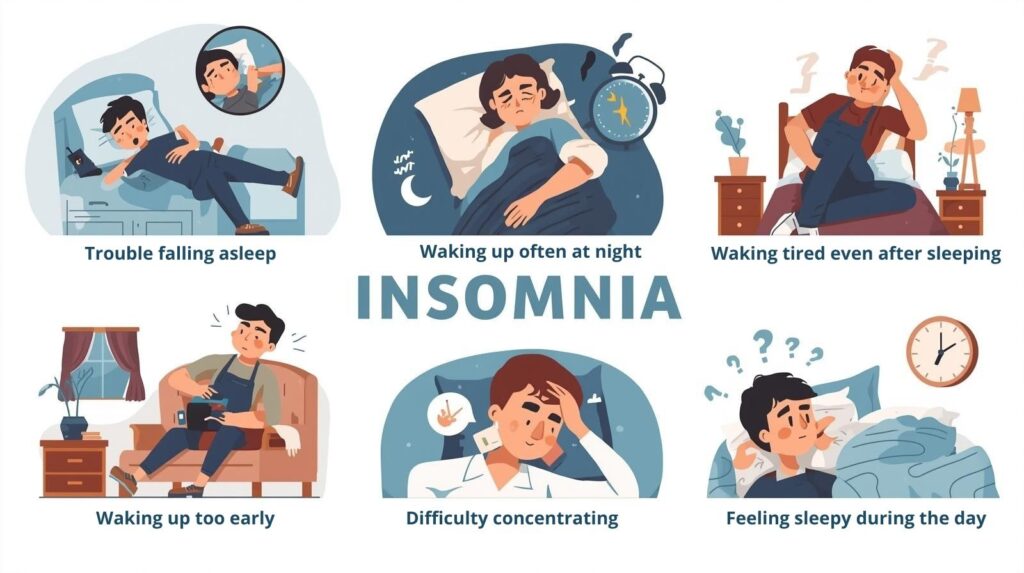
Signs and Symptoms
People with insomnia often notice things like:
- Trouble falling asleep
- Waking up often at night
- Waking up too early
- Feeling tired even after sleeping
- Difficulty concentrating
- Irritability or low mood
- Feeling sleepy during the day
Over time, poor sleep can affect memory, mood, and overall health.
Almost everyone experiences insomnia at some point.
A stressful week. A big life change. Exams.
That’s normal.
But when sleep problems happen often and start affecting daily life, it may be time to talk to a doctor or mental health professional.
Sleep is not a luxury.
It’s one of the main ways the brain repairs itself.
References
National Institute of Mental Health
American Academy of Sleep Medicine

Pingback: Why People Stay in Toxic Relationships: The Psychology Behind Staying - Psych Notes & Coffee