
Imagine going through something really scary.
A car crash.
A robbery.
A natural disaster.
Or witnessing someone get badly hurt.
For a few days after, your body still feels like it’s in danger. Your heart jumps easily. Your mind keeps replaying what happened. You feel tense, tired, or emotionally numb.
For many people, these reactions slowly fade.
But for some people, the stress stays strong for a while. That’s where Acute Stress Disorder comes in.
What Is Acute Stress Disorder?
According to the Diagnostic and Statistical Manual of Mental Disorders, Fifth Edition, Text Revision (DSM-5-TR), Acute Stress Disorder (ASD) is a trauma-related condition that can happen after someone experiences or witnesses a traumatic event.
The key thing is timing.
ASD symptoms appear between 3 days and 1 month after the trauma.
If the symptoms continue longer than one month, the condition may instead be diagnosed as Posttraumatic Stress Disorder (PTSD).
So you can think of ASD as the early stage of trauma response.
Not everyone with ASD develops PTSD. Many people recover with time and support.
What Counts as a Traumatic Event?
Trauma means a situation involving real or threatened death, serious injury, or sexual violence.
Examples include:
- Serious accidents
- Physical or sexual assault
- Natural disasters
- War or violence
- Witnessing someone die or get severely hurt
- Learning that a close family member experienced a violent trauma
The brain reacts strongly because it thinks survival is at risk.
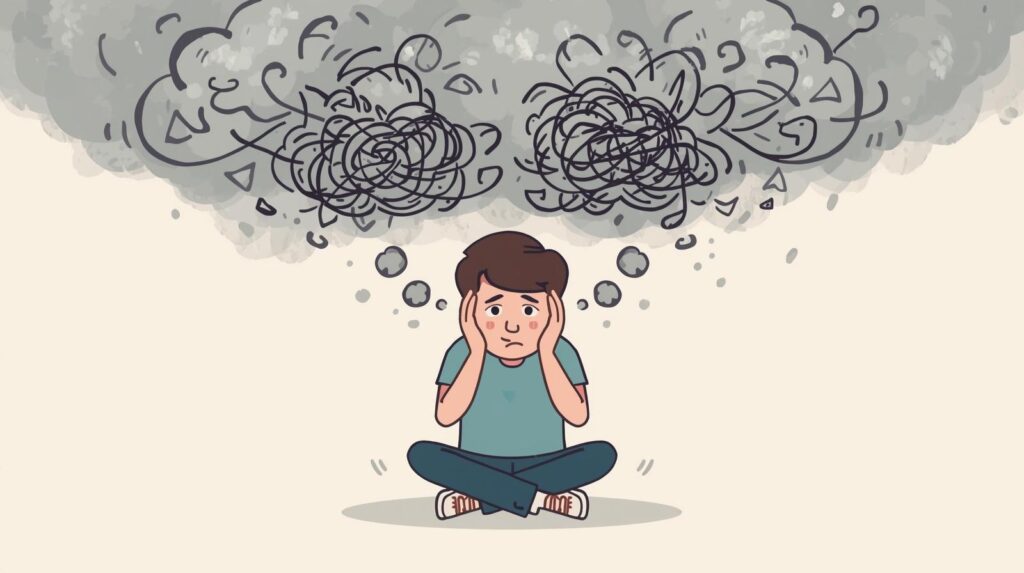
Are There Types of Acute Stress Disorder?
Technically, the DSM-5-TR does not divide ASD into official types.
Instead, it describes groups of symptoms. A person needs at least 9 symptoms from these groups to be diagnosed.
Think of these as different ways trauma shows up in the mind and body.
1. Intrusion Symptoms
(The trauma keeps popping back into the mind.)
These are unwanted memories or reminders of the event.
Examples:
- Flashbacks (feels like the event is happening again)
- Nightmares about the trauma
- Sudden images of the event in your mind
- Strong emotional reactions when reminded of it
Example:
Someone who survived a car crash might feel panic every time they hear screeching brakes.
2. Negative Mood
(The person struggles to feel positive emotions.)
The emotional system becomes “shut down.”
Examples:
- Feeling numb
- Difficulty feeling happiness or love
- Emotional emptiness
Example:
Someone who used to enjoy family dinners suddenly feels nothing during them.
3. Dissociation
(The mind disconnects a little to protect itself.)
Dissociation means feeling mentally detached from reality.
Examples:
- Feeling like you’re watching yourself from outside your body
- Feeling like the world isn’t real
- Not remembering parts of the traumatic event
Example:
A person might say, “It felt like I was in a movie when it happened.”
4. Avoidance
(Trying to stay away from reminders of the trauma.)
Examples:
- Avoiding certain places
- Avoiding conversations about the event
- Avoiding thoughts about what happened
Example:
Someone who experienced a robbery may avoid that street entirely.
5. Arousal Symptoms
(The body stays in “alert mode.”)
Your nervous system thinks danger is still around.
Examples:
- Irritability or sudden anger
- Trouble sleeping
- Difficulty concentrating
- Being easily startled
- Feeling constantly on edge
Example:
A door slamming might cause someone to jump as if something terrible just happened.
Why Does Acute Stress Disorder Happen?
ASD happens because the brain is trying to process extreme stress.
During trauma, the body activates the fight-or-flight response.
This is the survival system that prepares us to face danger or escape it.
Stress hormones like cortisol and adrenaline flood the body. They sharpen attention and prepare muscles for action.
Normally, once the danger passes, the system calms down.
But after trauma, the brain sometimes stays stuck in survival mode.
It keeps replaying the event, scanning for danger, and staying alert.
This is the brain trying — sometimes clumsily — to protect us.
Signs Someone Might Have Acute Stress Disorder
Common signs include:
- Repeated memories or nightmares about the trauma
- Feeling emotionally numb
- Avoiding reminders of what happened
- Trouble sleeping
- Feeling tense or jumpy
- Difficulty concentrating
- Feeling detached from reality
- Irritability or sudden anger
- Strong distress when reminded of the event
These symptoms must:
- Start within 3 days after the trauma
- Last less than 1 month
- Cause significant distress or problems in daily life
When Does It Become PTSD?
Here’s the key difference.
If trauma symptoms continue for more than one month, the diagnosis may change to **Posttraumatic Stress Disorder.
PTSD is similar to ASD, but it lasts longer and often needs deeper treatment.
Think of it like this:
- Acute Stress Disorder: early trauma response (3 days to 1 month)
- PTSD: long-term trauma response (more than 1 month)
The Good News
Many people recover from Acute Stress Disorder.
With the right support, the brain slowly learns that the danger is over.
Helpful supports may include:
- Talking to a therapist
- Support from family and friends
- Trauma-focused therapy
- Good sleep and stress management
Early support can reduce the risk of developing PTSD.
A Simple Way to Think About It
Trauma shakes the brain.
Acute Stress Disorder is the mind trying to make sense of what just happened.
Sometimes the system calms down naturally.
Sometimes it needs a little help.
Either way, it’s not weakness.
It’s the brain reacting to something overwhelming.
References
American Psychiatric Association. (2022). Diagnostic and Statistical Manual of Mental Disorders (5th ed., text rev.; DSM-5-TR).
National Institute of Mental Health. (2023). Acute Stress Disorder.
Bryant, R. A. (2017). Acute Stress Disorder. Current Opinion in Psychology.
Mayo Clinic. Acute Stress Disorder Overview.
If you enjoyed this topic, you might also like:
- Why People Stay in Toxic Relationships
- Why Our Brain Loves Drama and Gossip
- Agoraphobia Explained Simply
More psychology articles are also available on my website.