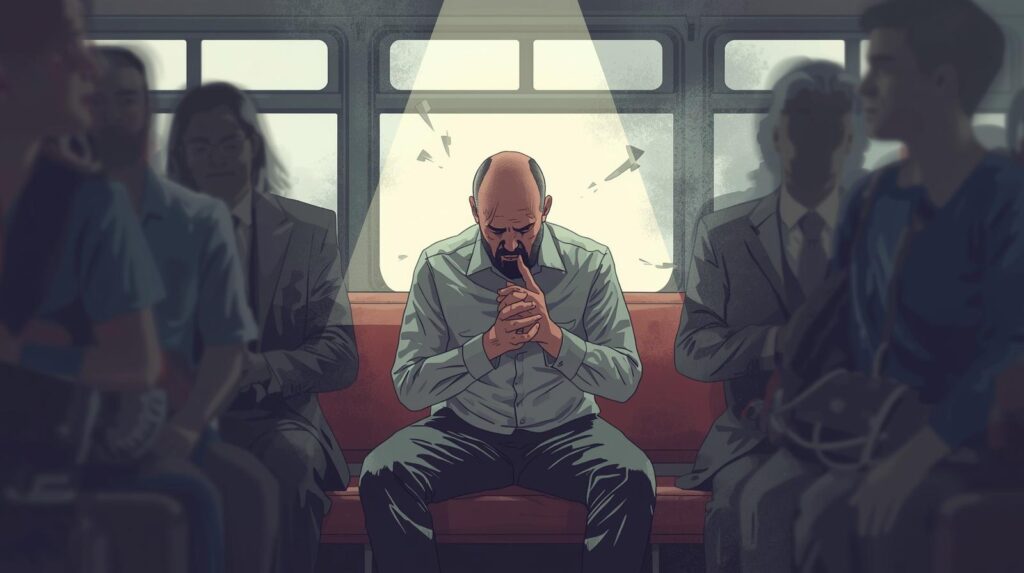
You know those moments when something happens in public that makes everyone freeze for a second—confused, uncomfortable, unsure how to react?
Most of us are taught to immediately label it. Strange. Inappropriate. Disturbing.
And sometimes, it is.
But what we rarely pause to ask is: what’s actually going on underneath that behavior?
Not to excuse it—but to understand it.
Because behind some of these actions is something more complex than people expect. Something that psychology refers to as Exhibitionist Disorder.
So what is Exhibitionist Disorder, really?
In simple terms, Exhibitionist Disorder is a condition where a person experiences intense sexual arousal from exposing their genitals to an unsuspecting stranger.
According to the DSM-5-TR (the manual psychologists use for diagnosis), it becomes a disorder when:
- The urges last for at least 6 months, and
- The person either acts on these urges or feels significant distress because of them
That second part matters. Because not every unusual urge automatically becomes a disorder. It’s the pattern, the persistence, and the impact that define it.
Beyond the stereotype
Most people picture someone who simply “wants attention” or enjoys shocking others.
But that explanation is… incomplete.
For many individuals, the experience isn’t about confidence or boldness—it’s often the opposite.
There can be:
- Intense anxiety
- Feelings of inadequacy
- Difficulty forming intimate relationships
The act itself becomes less about the other person—and more about the internal release of tension.
It’s not always about pleasure in the way people assume. Sometimes, it’s about control, validation, or a brief escape from emotional discomfort.
What it can feel like internally
Imagine carrying a strong, intrusive urge that builds over time.
It doesn’t just “pop up.” It lingers. It grows.
There may be a mix of:
- Anticipation
- Anxiety
- Shame—even before anything happens
And after the act? Relief might come… but often followed by guilt or regret.
This cycle—urge, action, relief, shame—can quietly repeat itself.
And that repetition is where it becomes difficult to break.
How it shows up in real life
It doesn’t always look like what people expect from movies or headlines.
Sometimes, it appears as:
- Repeated incidents in similar environments (parks, quiet streets, public transport)
- Careful planning to avoid being caught
- Or paradoxically, risky behavior despite knowing the consequences
Some individuals may never act on their urges—but feel deeply distressed by them.
Others may struggle with impulse control, especially during periods of stress, loneliness, or emotional overwhelm.
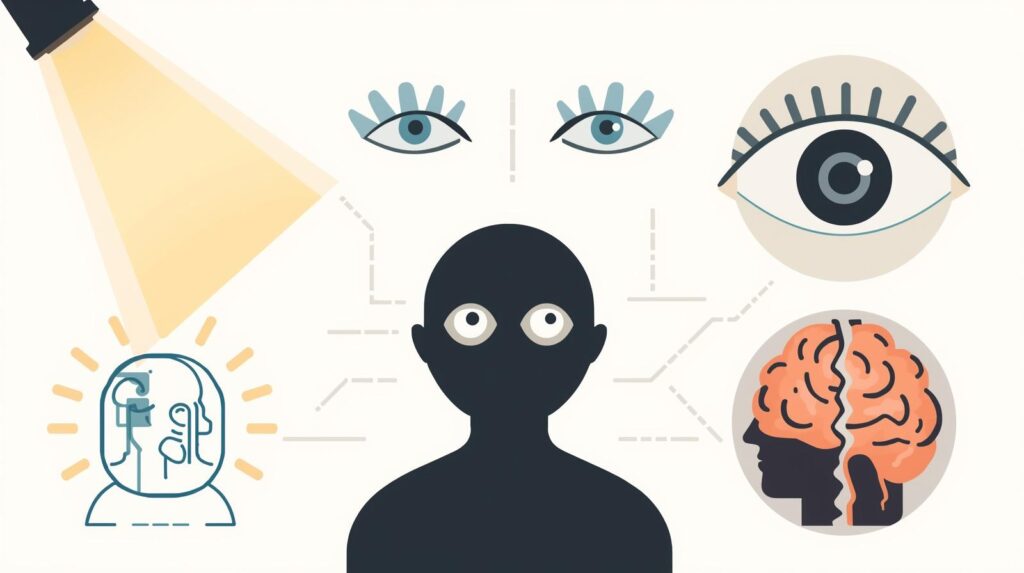
Why does this happen?
There isn’t a single cause.
Like many psychological conditions, Exhibitionist Disorder develops through a mix of factors.
Some possible influences include:
- Early exposure to inappropriate sexual experiences
- Difficulty forming emotional or sexual connections
- Reinforcement patterns (when behavior is repeated because it briefly relieves tension)
- Underlying mental health concerns like anxiety or impulse-control difficulties
Over time, the brain can begin to associate relief or arousal with the act itself, strengthening the cycle.
It’s less about “choosing to be this way” and more about patterns that become ingrained.
Signs people often overlook
Not everything is obvious.
Some signs are subtle and easy to dismiss, such as:
- Persistent intrusive fantasies involving exposure
- Increasing difficulty controlling impulses
- Emotional distress tied to these thoughts
- Avoidance of healthy relationships or intimacy
These don’t automatically mean someone has the disorder—but they can signal that something deeper is going on.
Why this matters in everyday life
This isn’t just about the person experiencing the urges.
It directly affects others—often in ways that cause fear, discomfort, or emotional distress.
That’s why understanding this condition is important.
Because without understanding:
- People jump straight to judgment
- Those struggling may avoid seeking help
- The cycle continues unchecked
And when something is misunderstood, it tends to stay hidden—and untreated.
Can it get better?
Yes—but not in a quick, dramatic way.
Recovery here is less about “stopping overnight” and more about gradually understanding and managing the patterns.
Treatment often involves:
- Therapy focused on impulse control and behavior patterns
- Learning healthier ways to cope with urges and emotional discomfort
- Addressing underlying issues like anxiety, shame, or social difficulties
Progress can be slow. There may be setbacks.
But change is possible—especially when there’s consistent support and accountability.
A quiet reflection
It’s easy to reduce people to their most uncomfortable behaviors.
To define them by a single action.
But human behavior—especially the kind we don’t understand—is rarely that simple.
Sometimes, what looks shocking on the outside is rooted in something unresolved on the inside.
And while understanding doesn’t excuse harm, it does something important:
It opens the door to change.
References
- American Psychiatric Association. (2022). Diagnostic and Statistical Manual of Mental Disorders (5th ed., text rev.; DSM-5-TR)
- Kafka, M. P. (2010). Hypersexual disorder: A proposed diagnosis for DSM-V. Archives of Sexual Behavior
- Seto, M. C. (2019). The Psychology of Sexual Offending
- Laws, D. R., & O’Donohue, W. (Eds.). (2008). Sexual Deviance: Theory, Assessment, and Treatment
- Marshall, W. L., & Marshall, L. E. (2014). Psychological treatment of sex offenders
If you enjoyed this topic, you might also like:
- It’s Not Just a Bad Day: What Major Depression Really Feels Like
- Acute Stress Disorder: When the Mind Is Still in Survival Mode
- People Change More Than You Think—Here’s the Powerful Reason Why
More psychology articles are also available on my website.