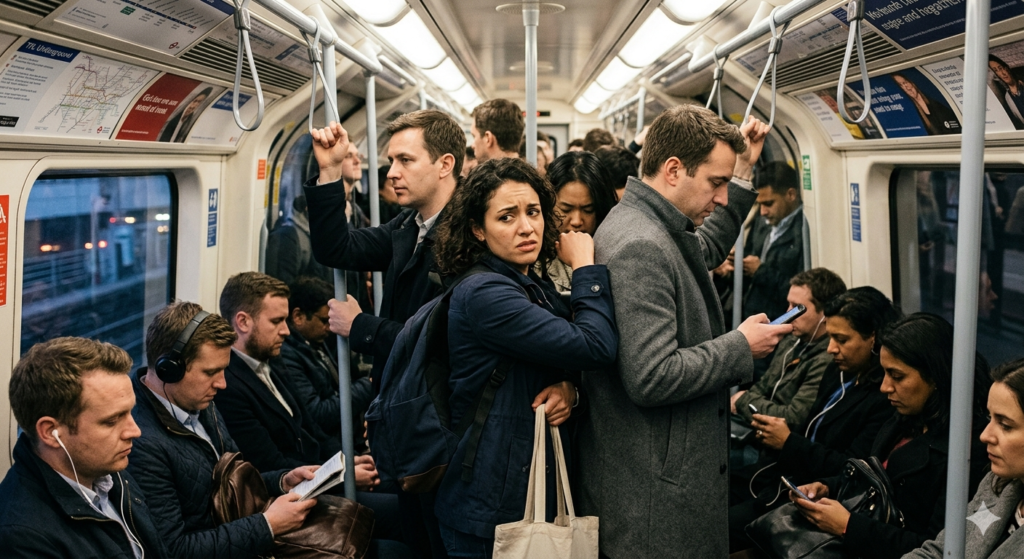
You’re in a crowded place—maybe a train, an elevator, or a long line.
At first, everything feels normal. People are close, shoulders brushing, bags bumping into each other. It’s expected. You tell yourself, “This is just what crowds are like.”
Then someone presses against you.
You shift slightly. Maybe it was just the movement.
But it happens again.
This time, your body reacts before your thoughts do. You feel tense. A little uneasy. You start paying attention—more than you want to.
And then comes that quiet question:
“Was that intentional… or am I overthinking it?”
So you stay silent. You look away. You wait for the moment to pass.
But the feeling doesn’t pass as quickly as the moment does.
You’re Not Alone
If you’ve ever experienced something like this, you’re far from alone—even if it felt isolating in the moment.
Many people go through similar situations but never talk about them. Why? Because these experiences live in a gray area. They’re not always obvious. They’re easy to doubt.
Psychologically, we tend to minimize unclear or uncomfortable situations. It’s a way of protecting ourselves from conflict, embarrassment, or the fear of being wrong.
So instead of reacting, we question ourselves.
Instead of speaking up, we stay quiet.
And that can make the experience feel even more confusing.
What This Actually Is (And Why It Feels So Confusing)
There are situations where unwanted touch in public spaces is not accidental.
In psychology, there is a condition called Frotteuristic Disorder, which involves intentional physical contact with a non-consenting person, often in crowded environments.
But here’s what makes it difficult:
It rarely looks obvious.
There’s no clear signal. No dramatic moment. Just small actions that can easily be explained away.
That’s why people often walk away unsure of what just happened.
Common Patterns You Might Notice
Even though these situations feel subtle, they often follow certain patterns.
1. Contact That Doesn’t Adjust
In a crowded space, people usually shift and reposition naturally.
But sometimes, one person doesn’t.
They stay too close—even when there’s space to move.
2. Repeated “Accidental” Touch
You move slightly to create distance.
But the contact happens again.
And again.
At some point, it stops feeling like coincidence.
3. A Feeling That Doesn’t Match the Situation
Nothing “obvious” happens—but your body feels tense.
You feel alert. Uncomfortable. Aware in a way you weren’t before.
That feeling matters.
Even if you can’t fully explain it.
Why Your Reaction Might Feel So Uncertain
One of the hardest parts of these experiences is your own reaction.
You might wonder:
- “Why didn’t I say anything?”
- “Why am I still thinking about it?”
- “Was I just overreacting?”
But there’s a psychological reason for this.
When something feels unclear or potentially unsafe, the brain often chooses the freeze or minimize response.
Instead of confronting the situation, it tries to:
- Avoid conflict
- Reduce embarrassment
- Keep you safe in the moment
So staying quiet doesn’t mean you were weak.
It means your brain was trying to protect you in the fastest way it could.
Hidden Factors That Make This Harder
These situations are especially difficult because of the environment they happen in.
- Crowds normalize physical contact, making it harder to distinguish intention
- There’s often no clear “proof”, which leads to self-doubt
- People fear being wrong, so they stay silent
- The moment passes quickly, leaving only the feeling behind
All of this creates a situation where the experience is real—but hard to validate.
Practical Ways to Protect Your Space
You don’t need to completely change how you move through the world. But small, intentional actions can help you feel more in control.
1. Trust Your First Feeling
If something feels off, you don’t need to immediately explain it.
Discomfort is already a valid signal.
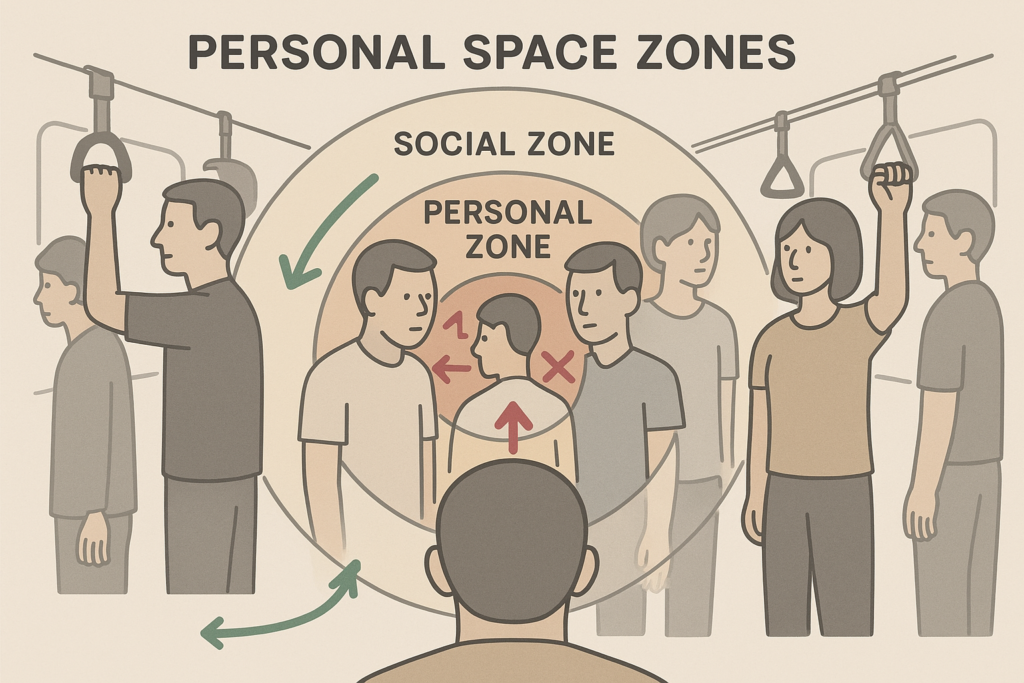
2. Create Subtle Distance
- Shift your position
- Step to the side
- Place a bag or object between you and others
Even small movements can create a sense of safety.
3. Use Simple, Calm Signals
In safer situations, you can:
- Turn your body away
- Make brief eye contact
- Say something simple like, “Please give space”
It doesn’t have to be confrontational to be effective.
4. Choose Safer Positions When Possible
- Stay near exits or open spaces
- Stand where movement is easier
- Avoid being fully boxed in when you can
These small choices can make a difference.
What to Do in These Situations
If this is you (feeling uncomfortable but unsure):
You don’t need full certainty to trust yourself. That feeling of discomfort is real—even if the situation is unclear.
If this is you (freezing or staying silent):
That’s a natural response. Your brain chose safety in the moment. You can reflect on it later without blaming yourself.
If this is you (still thinking about it after it happened):
That’s also normal. Unresolved or confusing experiences tend to stay with us longer because the brain is trying to make sense of them.

When to Seek Support
You might consider talking to someone if:
- The experience keeps coming back to your mind
- You feel anxious in crowded places afterward
- It starts affecting how safe you feel in everyday situations
This doesn’t mean something is “wrong” with you.
It simply means the experience mattered—and it’s okay to process it.
Final Thoughts
Not every uncomfortable moment is easy to explain.
Some are quiet. Subtle. Easy to dismiss.
But that doesn’t make them unimportant.
If something felt wrong, even in a small way, it deserves to be acknowledged.
Because at the center of all of this is something simple:
You have the right to feel safe in your own space—even in a crowd.
Simple Action Plan (5-Day Awareness Practice)
Day 1: Pay attention to how you feel in crowded spaces
Day 2: Notice what situations make you feel most comfortable or uncomfortable
Day 3: Practice creating small physical distance when needed
Day 4: Prepare one simple response you can use if necessary
Day 5: Reflect: What helps me feel safe—and how can I protect that?
Before You Go
Some experiences don’t leave marks—but they leave questions.
And sometimes, those questions stay with us longer than we expect.
Maybe understanding them doesn’t change what happened.
But it can change how you see yourself in that moment.
So let me ask you:
Have you ever felt something was “off” in a situation—but couldn’t fully explain why?
References
- American Psychiatric Association. (2022). Diagnostic and Statistical Manual of Mental Disorders (DSM-5-TR).
- Kafka, M. P. (2010). Hypersexual disorder: A proposed diagnosis for DSM-V. Archives of Sexual Behavior.
- Seto, M. C. (2019). The Psychology of Sexual Offending. American Psychological Association.
- World Health Organization (WHO). ICD-11 Clinical Descriptions and Diagnostic Guidelines.
- Marshall, W. L., & Barbaree, H. E. (1990). An integrated theory of sexual offending.
If you enjoyed this topic, you might also like:
- The Devastating Reality of Prolonged Grief Disorder
- Exhibitionist Disorder Secrets: What’s Really Driving the Behavior
- “I Know I’m Right”… Or Am I? The Psychology Behind Believing What We Want
More psychology articles are also available on my website.