Okay, imagine we’re sitting in a café.
You know how some people say, “Oh, they just don’t like going out. They’re introverted.” Sometimes that’s true. But sometimes, it’s something deeper. Something heavier.
Let’s talk about agoraphobia.
What is Agoraphobia?
In the DSM-5-TR — the main guide mental health professionals use — agoraphobia is defined as intense fear or anxiety about being in places where escape might feel hard, or help might not be available if panic happens.
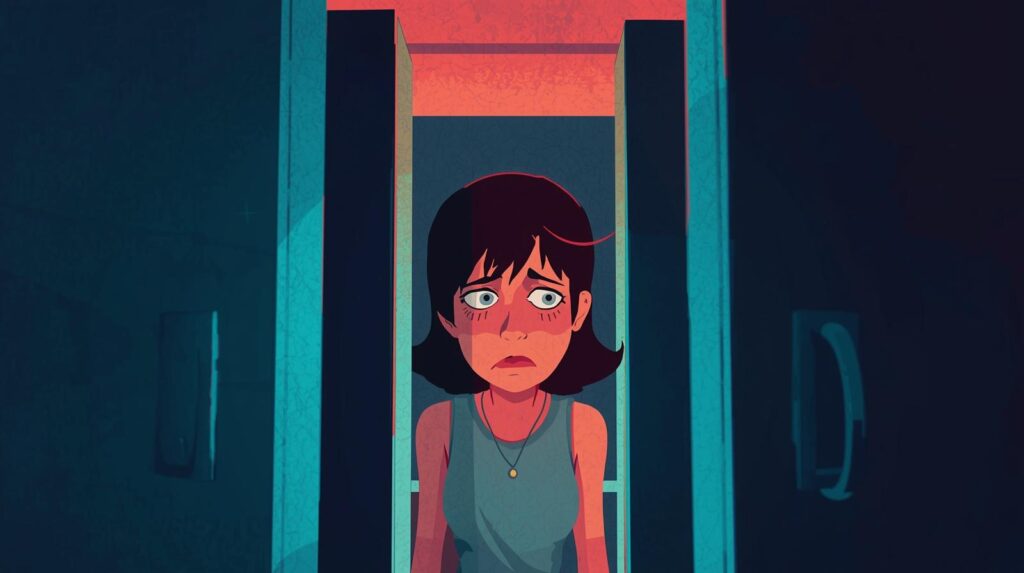
In simple words? It’s not about being shy. It’s about feeling trapped.
A person with agoraphobia might fear crowded malls, public transport, open spaces, lines at the grocery, or even just being outside alone. They avoid these situations because they’re scared something bad will happen — like a panic attack — and they won’t be able to leave or get help.
A panic attack is a sudden wave of intense fear with physical symptoms like a racing heart, shortness of breath, dizziness, or feeling like you’re losing control. It can feel like dying, even when you’re not.
History of Agoraphobia
Agoraphobia isn’t just a modern thing. Back in the late 1800s, a German psychiatrist named Karl Westphal noticed patients who avoided leaving their homes because public spaces made them panic. At first, doctors thought these people were simply “nervous” or shy. Some even assumed it was just a personality quirk. But over time, researchers realized it was more than that — it’s a real anxiety disorder, not laziness or introversion.
As the 20th century rolled in, scientists started linking agoraphobia to panic disorder. They saw a pattern: people avoided certain places after panic attacks, and that avoidance made the fear grow. Eventually, the DSM-5-TR officially recognized agoraphobia as a distinct condition. Today, we know it’s the brain trying to protect someone from danger — even when the world is actually safe — and that awareness helps professionals treat it better.
Signs of Agoraphobia
Common signs include:
- Avoiding public transport or crowded areas
- Refusing to leave home alone
- Anxiety about being trapped or unable to get help
- Missing important events, like work or school
Because of this, life can slowly shrink, making everyday activities stressful or impossible.
Physical and Emotional Symptoms
Physical symptoms often include:
- Racing heartbeat
- Shortness of breath
- Dizziness or lightheadedness
- Trembling or sweating
Emotional symptoms include:
- Fear of being in public
- Feeling trapped or helpless
- Anticipatory anxiety (worrying before even leaving home)
These symptoms often intensify before panic attacks and can cause exhaustion over time.
Diagnosis
Mental health professionals diagnose agoraphobia through clinical evaluation. They look for patterns of avoidance, the presence of panic attacks, and how the fear affects daily life. Sometimes, questionnaires or structured interviews help clarify severity.
Biology and Psychology
The brain plays a key role. For someone with agoraphobia, the amygdala — the part that signals danger — is overactive. This makes everyday situations feel threatening. Genetics, past trauma, and learned behavior also contribute. For example, if early experiences teach a person the world is unsafe, avoidance becomes a coping mechanism.
Psychologically, avoidance reinforces fear. Each time someone stays home, the brain learns, “Outside is dangerous,” making it harder to leave next time. This is why therapy often uses gradual exposure: small steps help retrain the brain.
People with agoraphobia usually want to go out. They miss birthdays, skip school, or avoid job interviews. Not because they’re lazy or uncaring, but because their body goes into survival mode. Survival mode means the brain thinks danger is everywhere — even when it isn’t.
The good news? Agoraphobia is treatable. Slowly and gently, through therapy and sometimes medication, people can relearn that the outside world is safe. The goal isn’t to force someone out; it’s to build confidence step by step.
Sometimes the hardest door to open… is the front one.
References:
National Institute of Mental Health – Agoraphobia
Mayo Clinic – Agoraphobia Symptoms & Causes
Healthline – What Is Agoraphobia?