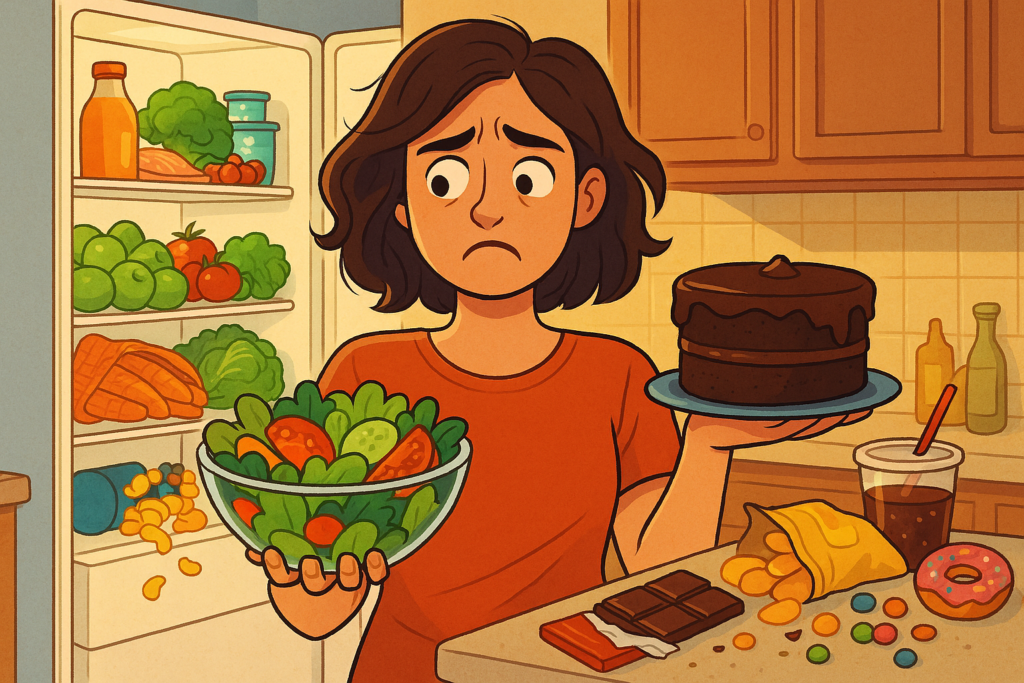
You tell yourself you want to be healthier, but you still reach for fast food after a long day.
You say honesty matters to you, but you catch yourself making small excuses to avoid conflict.
You believe rest is important, yet you feel guilty the moment you stop working.
And then there’s that uncomfortable feeling that creeps in right after.
Not exactly guilt. Not exactly anxiety.
Just… tension.
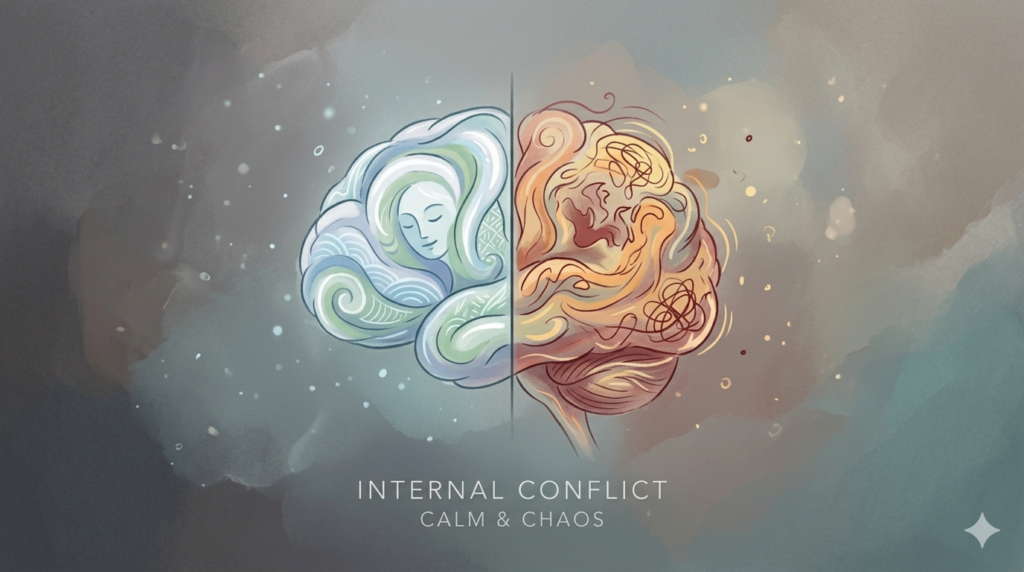
It’s like your mind is quietly arguing with itself.
One part says, “This isn’t right.”
Another part says, “It’s fine. Don’t overthink it.”
So you move on. You distract yourself. You justify it.
But somehow, the discomfort doesn’t fully go away.
If you’ve ever felt this internal tug-of-war, you’re not overreacting.
You’re experiencing something very human.
Something we all go through more often than we realize.
More People Understand This Than You Realize
That uncomfortable mental tension has a name, and more importantly, it’s incredibly common.
Most people experience it daily, even if they don’t recognize it.
You might think this only happens when someone makes a big mistake or faces a major life decision.
But the truth is, it shows up in small, quiet moments.
The everyday choices. The little contradictions.
Psychologists have found that people naturally try to reduce this discomfort as quickly as possible.
Not because they’re weak or inconsistent, but because the human brain is wired to seek internal harmony.
We want our thoughts, beliefs, and actions to align.
When they don’t, it creates friction.
So if you’ve ever felt confused about your own behavior, or wondered why you keep doing things that don’t match who you want to be, you’re not alone.
You’re simply human.
What’s Really Going On?
Cognitive dissonance doesn’t always look the same.
It tends to show up in patterns that are easy to miss if you’re not paying attention.
One common pattern is “I know better, but I still do it.”
This happens when your behavior doesn’t match your knowledge or values.
For example, a student knows they need to study, but keeps procrastinating.
Or someone understands the importance of saving money, yet keeps overspending.
The awareness is there, but the action doesn’t follow.
And that gap creates tension.
Another pattern is “I change my thinking to feel better about my actions.”
Instead of changing behavior, the mind adjusts beliefs to reduce discomfort.
You might say, “It’s just one cheat day,” or “Everyone does this anyway,” even when you know it’s not fully true.
This isn’t lying in a malicious way.
It’s your brain trying to protect you from feeling uneasy.
Then there’s “I avoid situations that challenge my beliefs.”
This one is subtle.
You might avoid conversations, information, or people that make you question your choices.
For example, someone who feels unsure about their habits might avoid health discussions altogether.
Not because they don’t care, but because it brings up discomfort they’d rather not face.
All of these patterns are different ways the mind tries to restore balance.
Even if it means bending the truth a little.
A Closer Look at What’s Going On
This experience is called cognitive dissonance.
In simple terms, it’s the mental discomfort you feel when your thoughts, beliefs, and actions don’t match.
It was first introduced by psychologist Leon Festinger.
He explained that when there’s inconsistency inside us, it creates psychological tension that we feel motivated to reduce.
Think of it like this:
Your mind prefers alignment.
When things don’t line up, it feels off.
And that “off” feeling is what pushes you to either change your behavior or adjust your thinking.
The Hidden Side of This Experience
Cognitive dissonance doesn’t always feel dramatic.
Most of the time, it’s quiet.
It can feel like a small knot in your chest when you think about something you’ve been avoiding.
Or a subtle irritation when someone points out something you already know deep down.
Sometimes it shows up as defensiveness.
You feel the urge to explain yourself, even when no one is accusing you.
Other times, it feels like overthinking.
You replay decisions in your head, trying to make them feel “right.”
There are moments when it feels like guilt, but not strong enough to force change.
Just enough to linger.
And sometimes, it shows up as numbness.
You disconnect from the feeling entirely, telling yourself it doesn’t matter.
That’s what makes it tricky.
It doesn’t always scream for attention.
But it quietly shapes your choices, your habits, and how you see yourself.
What Drives This Behavior
At its core, cognitive dissonance is about consistency.
We all have a sense of identity.
“I am responsible.”
“I care about my health.”
“I value honesty.”
These beliefs act like anchors.
They help us understand who we are.
But when our actions don’t match these beliefs, the brain experiences tension.
And it tries to fix it.
There are usually three ways people respond:
First, they change their behavior.
For example, someone who feels uneasy about procrastinating might finally start studying.
Second, they change their beliefs.
They might say, “I work better under pressure,” even if it’s not entirely true.
Third, they justify the situation.
They add explanations like, “I’ve had a stressful week,” or “This is just temporary.”
You can see this in everyday life.
A person in a toxic relationship might say, “It’s not that bad,” to avoid facing the pain of leaving.
A student might say, “Grades don’t define me,” after not preparing for an exam.
These responses aren’t random.
They’re attempts to reduce discomfort and restore a sense of internal balance.
Why This Feels So Hard to Change
Cognitive dissonance happens because we’re shaped by many layers of influence.
We grow up with certain values.
Family expectations, cultural norms, and personal experiences all shape what we believe is “right.”
But life isn’t always aligned with those beliefs.
We face stress, pressure, and emotional needs that pull us in different directions.
Sometimes, behavior is driven by comfort.
You choose what feels good in the moment, even if it doesn’t match your long-term values.
Other times, it’s about survival.
You adapt your thinking to cope with difficult situations.
There’s also fear.
Fear of change, fear of failure, fear of losing something familiar.
So instead of changing behavior, the mind changes the story.
Over time, these small adjustments become habits.
And the gap between who you are and what you do can slowly grow without you noticing.
Common Signs You Might Miss
Many people don’t realize they’re experiencing cognitive dissonance because the signs are subtle.
You might find yourself making frequent excuses for the same behavior.
Or feeling slightly uncomfortable but brushing it off quickly.
You might avoid certain topics because they make you uneasy.
Or feel defensive when someone brings up something you’ve been ignoring.
There’s also that feeling of being “stuck.”
You know something isn’t right, but you don’t take action.
Sometimes, it looks like over-justifying small decisions.
Or constantly needing reassurance that what you’re doing is okay.
These are quiet signals that something inside you is misaligned.
What This Looks Like in Everyday Life
In school, it might look like procrastinating even though you care about your grades.
You tell yourself you’ll start tomorrow, but tomorrow keeps moving.
At work, it might show up as staying in a job that drains you while telling yourself it’s “practical.”
You feel the tension, but you push it aside.
In relationships, it can look like tolerating behavior that doesn’t align with your values.
You might say, “It’s fine,” even when it doesn’t feel fine.
Even in simple habits, like spending, eating, or resting, it shows up.
You know what you want for yourself, but your actions don’t fully match.
And each time it happens, there’s that small internal conflict.
Not loud enough to force change, but strong enough to stay with you.
Why This Affects You More Than You Think
Cognitive dissonance might seem small, but over time, it affects how you see yourself.
When your actions and values don’t align, it can slowly lower your self-trust.
You start to question your own decisions.
It can also create emotional exhaustion.
That constant internal tension takes energy.
In relationships, it can lead to confusion.
You might struggle to communicate clearly because you’re not fully honest with yourself.
At work or school, it can affect motivation.
It’s harder to stay consistent when your actions don’t feel aligned with your goals.
It’s not about being perfect.
It’s about feeling at peace with your own choices.
How to Make Small Changes That Stick
Start with awareness.
Not judgment. Just noticing.
When you feel that small discomfort, pause.
Ask yourself gently, “What feels off here?”
Then focus on small alignment.
You don’t need to fix everything at once.
Even small changes matter.
If you value health, start with one meal.
If you value honesty, start with one conversation.
Practice honest self-talk.
Instead of justifying everything, try saying, “This doesn’t fully match what I want, and that’s okay. I can adjust.”
And most importantly, allow yourself compassion.
You’re not inconsistent because you’re flawed.
You’re human.
How to Respond When This Happens
If this is you—constantly justifying your actions:
Try slowing down your thinking.
Notice when you’re explaining something to yourself too quickly.
There might be something deeper underneath.
If this is you—feeling stuck and not changing behavior:
Start very small.
Change one action, even if it feels insignificant.
Consistency matters more than intensity.
If this is you—avoiding uncomfortable truths:
Gently face one thing you’ve been avoiding.
Not all at once. Just enough to build awareness.
Signs It’s Time to Get Support
If the discomfort feels overwhelming, or if it starts affecting your daily functioning, talking to a mental health professional can help.
Sometimes, having a safe space to explore your thoughts makes it easier to understand what’s really going on.
You don’t have to figure everything out on your own.
Your 5-Day Action Plan
If everything you’ve read so far feels a little heavy or overwhelming, this is where we make it lighter. You don’t have to change everything at once to feel more aligned. Sometimes, small and gentle steps are enough to shift how you feel inside. Think of this as a quiet reset you can return to anytime.
Day 1: Notice one moment of discomfort
Day 2: Write down what felt misaligned
Day 3: Make one small change
Day 4: Practice honest self-talk
Day 5: Reflect without judgment
Repeat gently.
You don’t have to get it perfect—just keep showing up with a little more awareness each day. Even the smallest moments of honesty with yourself can create real change over time. Let this be a practice, not a pressure. And as you move forward, take a moment to reflect on what this journey is really teaching you about yourself.
Reflections
Cognitive dissonance is the tension between what you believe and what you do.
It’s not a sign that something is wrong with you.
It’s a sign that something inside you wants alignment.
And the goal isn’t perfection.
It’s awareness.
Because once you understand that tension, you can start making choices that feel more honest, more aligned, and more peaceful.
What’s one small thing in your life right now that doesn’t fully align with who you want to be?
Not to judge it.
Just to notice it.
Because sometimes, awareness is the quiet beginning of change.
References
- Festinger, L. (1957). A Theory of Cognitive Dissonance
- American Psychological Association – Cognitive Dissonance Overview
- Harmon-Jones, E., & Mills, J. (2019). Cognitive Dissonance: Reexamining a Pivotal Theory in Psychology
If you enjoyed this topic, you might also like:
- Unwanted Touch in Public Places: What It Means and What You Can Do
- From Pavlov to Your Daily Routine: How Classical Conditioning Shapes Your Behavior
- When Your Body Doesn’t Feel Like Home: Understanding Gender Dysphoria Gently
More psychology articles are also available on my website.
If you prefer reading on Medium, this article is also available there.